
Sorry, no results.
Please try another keyword
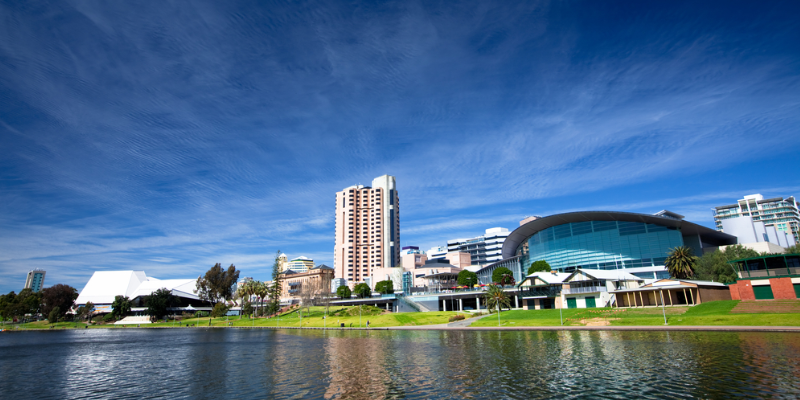
Recent data reveals that Adelaide has taken the lead with the fastest selling properties across the nation compared to any other capital city.
22 days is currently the average time houses are spending on the market, slightly in front of units at 23 days, with properties in some areas even being sold within two weeks.
Several suburbs across Adelaide are currently on the market for as little as 15 – 16 days, while for areas like Bridgewater, for houses, and Blackwood, for units, it’s just 14 days. The data shows that the median house prices for Bridgewater over the last year has been $1.05m, with units not far behind at a $1m average. In Blackwood median house prices were $1.1m but there was a significant contrast in median unit prices at $590,000, which can explain why this area has seen units getting snapped up in a short amount of time.
According to Andrea Heading, Chief Executive of Real Estate Institute of South Australia, demand versus limited properties is what’s fuelling sales across the city.
“It’s definitely supply versus demand,” she said.
“What we’ve seen is that there has been an accelerated buying cycle. Homes are selling quicker than what they have in the past, definitely, and that’s because in many instances they’re snapped up as soon as they’re on the market.”
With many buyers in the market, especially first home buyers, Ms Heading said,
“The time to buy is now because prices will continue to rise.”
According to Elite Agent, the median house price in Adelaide has risen 12 per cent over the last year, now close to $1 million. Unit values have overtaken this with a 14 per cent rise and the average now around $680,000.
It was also noted that properties across Australia spend on average 32 days on the market, placing Adelaide 10 days faster than what’s being seen nationally.
According to the Real Estate Institute of Australia’s (REIA) latest Housing Affordability Report, affordability declined across all states and territories over the December 2025 quarter, the first time since December 2024. This is a result of lenders and loan amounts.
The declines ranged from 1.1 percentage points in the Australian Capital Territory to 3.0 in Western Australia, with the full quarterly breakdown of change in housing affordability showing the following declines:
The report also reveals that on average 49.2% of the median family income is required to meet average loan repayments, a 2.2% affordability decline, although it remains 0.7 percentage points higher than recorded the same time last year.
A breakdown in the report of median weekly family income required to meet home loan repayments:
Rental affordability was a mixed bag, improving in Queensland, Victoria, South Australia, and Western Australia, however it declined in New South Wales, the Northern Territory, and the Australian Capital Territory. The quarterly decline reflected a 0.1 percentage point, although showed a 0.3 percentage point improvement annually.
In the December 2025 quarter, 34,013 new loans were committed to by first-home buyers, a rise of 16.3% in the last quarter, and a 9.9% increase year on year. $607,624 was the average loan size recorded for first-home buyers, an 8.5% quarterly increase and 11.8% year on year. 35.9% of December 2025 loan commitments were first home buyers.
The Real Estate Institute of Victoria (REIV) published key takeaways from the report, including:
With Western Australia recording the largest deterioration, the Real Estate Institute of Western Australia (REIWA) President Suzanne Brown said the decline in affordability was a result of strong price growth and increased first home buyer participation due to the Federal Government’s 5% deposit scheme.
“After easing earlier in the year, property price growth accelerated towards the end of 2025, with the median house sale price increasing 4.5 per cent over the December quarter, and the median unit sale price increasing 5.3 per cent,” she said.
“Growth was driven by lower-than-average new listings and already strong demand, which was boosted by the 5% deposit scheme coming into effect on 1 October.
“This scheme has enabled more buyers enter the market, particularly first home buyers, by reducing upfront barriers to home ownership. However, increased participation by new buyers utilising the scheme has contributed to larger loan sizes relative to income, lifting the proportion of household income required to meet mortgage repayments.
“Unfortunately, we can expect affordability to decline further in 2026, with prices continuing to rise strongly, an interest rate rise in February and March, and more expected over the year.”
The REIWA stated that while Western Australia experienced the largest decline in the December 2025 quarter, the state remained one of the most affordable nationally, only being more expensive than Tasmania, the Northern Territory, and the Australian Capital Territory.
Ray White’s latest rental analysis, featured in Elite Agent, has revealed some notable trends. Weekly rental prices across the country are beginning to stabilise; however, affordability pressures remain, alongside a clear shift in market dynamics.
The analysis found that the average national rent for houses is now $650 per week (annual growth 4.8%), while units sit slightly lower at $625 per week (annual growth 4.2%).
A breakdown of weekly house rental prices across capital cities shows:
For regional areas, the state-by-state breakdown is:
The Gold Coast recorded the largest monthly growth increase of all cities between January 2026 – February 2026 (2.2% monthly growth), and also across the past year from February 2025 to January 2026 (8.6%). This places the popular Sunshine State destination as the most expensive location for house rentals in the country.
Sydney ranked as the second most expensive capital city and recorded the second highest monthly growth of 1.2% between January 2026 – February 2026. However, its year-on-year growth was more modest at 1.2%, among the lowest recorded, likely reflecting its already high rental base.
Cities that recorded some of the strongest year-on-year weekly rental growth include Hobart (7.1%), Sunshine Coast (5.3%), Perth (4.5%), Adelaide (4.2%), Brisbane (3.8%), and Canberra and Darwin (2.9%). Melbourne was the only capital city to record no monthly growth and a decline in annual rents, at -0.9%.
Nerida Conisbee, Chief Economist at Ray White said, “Historically, Sydney and Melbourne have dominated the upper end of the rental market. Today, lifestyle and smaller capital markets are competing at the top of the pricing spectrum.”
The article also notes a contrast in the unit market. Adelaide recorded annual growth of 10%, followed by Sydney (4.3%) and Melbourne (4.2%). Melbourne was also identified as the only capital city since 2020 where rental growth has outpaced price growth, despite recording the lowest annual rent growth overall.
Read the full article for a more detailed breakdown.