
Sorry, no results.
Please try another keyword
As we move through the first quarter of 2026, property market activity across New South Wales, Queensland and Victoria continues to reflect a consistent theme: buyers are balancing affordability with lifestyle, while navigating ongoing cost pressures and evolving market conditions.
For real estate agents, these shifts present a clear opportunity to align listings, marketing strategies and client conversations with what buyers are actively prioritising right now.
Houses continue to strengthen their dominance in New South Wales, increasing to 66.81% in Q1 2026, up from 64.48% last quarter. This reinforces the sustained shift toward space, flexibility and long-term value.
Strata properties have recovered to 27.04%, signalling renewed confidence after a softer end to 2025 (24.52%). In contrast, vacant land has fallen sharply to 6.15% from 11% in Q4 2025, suggesting new build and land banking activity is being constrained due to construction costs and feasibility challenges.
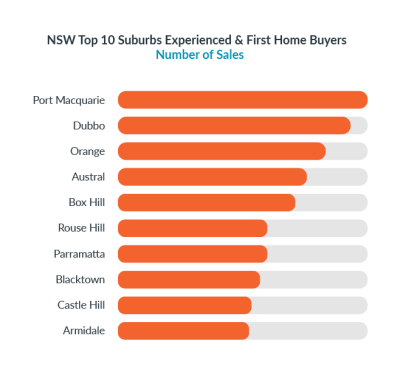
Regional New South Wales continues to attract strong buyer interest, with Port Macquarie (1), Dubbo (2) and Orange (3) leading the top 10 in Q1 2026. These locations offer a compelling mix of affordability and lifestyle, particularly for buyers being priced out of metro markets and seeking more space and value.
Western Sydney growth corridors remain a consistent and reliable source of demand. Austral (4), Box Hill (5), Rouse Hill (6) and Blacktown (8) have all featured steadily in the top 10 suburbs over the past three quarters, supported by infrastructure investment, new housing supply and relative affordability.
Parramatta (7), Castle Hill (9) and Armidale (10) also feature this quarter, further reinforcing the dual trend of metro accessibility and regional appeal.
First home buyers continue to favour strata, accounting for 74.26% of purchases, largely driven by affordability. Houses are steadily gaining traction, accounting for 23.26% of sales, and up from 22.58% in Q4 2025, potentially reflecting increased confidence and support from recent first home buyer scheme changes.
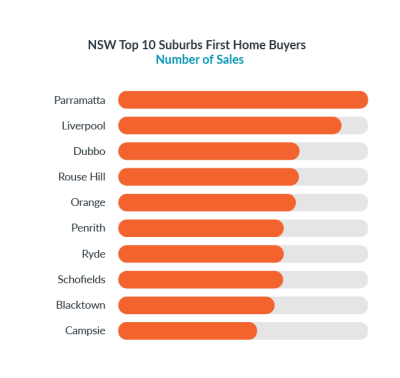
Hotspots for this quarter highlight a clear balance between price and connectivity. Parramatta (1), Liverpool (2) and Penrith (6) lead the way in Western Sydney, while Rouse Hill (4), Ryde (7), Schofields (8) and Campsie (10) also feature.
Regional centres such as Dubbo (3) remained a popular choice, with Orange (5) entering the list this quarter, further reinforcing that value remains front of mind for first home buyers navigating rising prices.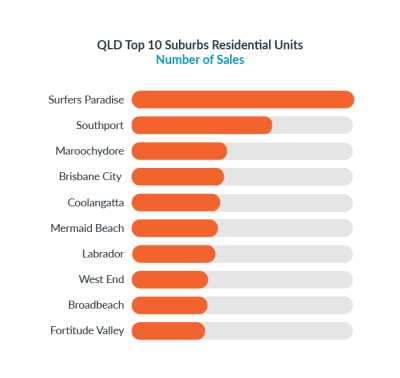
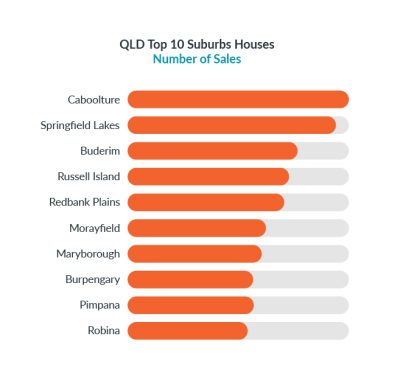
The Sunshine State’s housing market has been driven by growth corridors, with Caboolture holding the top position in Q1 2026. Its consistent performance since Q2 2025, ranking either first or second, highlights its ongoing appeal driven by location, affordability and demand.
Across outer Brisbane, Springfield Lakes (2), Redbank Plains (5), Morayfield (6), and Burpengary (8) have remained consistent performers in the Top 10 since Q2 2025, attracting buyers seeking family-friendly locations with strong value.
Regional markets are also expanding their footprint. Maryborough (7) remains in the top 10, while Russell Island (4) enters this quarter, reflecting buyers pushing further afield in search of affordability.
Robina is the only Gold Coast suburb to feature for houses this quarter, entering as a new addition, while Pimpama returns to the list after last appearing in Q3 2025.
Demand for residential units remains firmly anchored in lifestyle-driven locations, with the Gold Coast continuing to dominate. Six locations from the Gold Coast are present in the Q1 top 10: Surfers Paradise (1), Southport (2), Coolangatta (5), Mermaid Beach (6), Labrador (7), and Broadbeach (9). Surfers Paradise has retained the top spot for the fourth consecutive quarter, highlighting the sustained appeal of coastal apartment living.
In Brisbane, unit demand is concentrated in inner-city locations, with Brisbane City (4), West End (8) and Fortitude Valley (9) leading the way, reflecting ongoing demand for proximity, lifestyle and convenience.
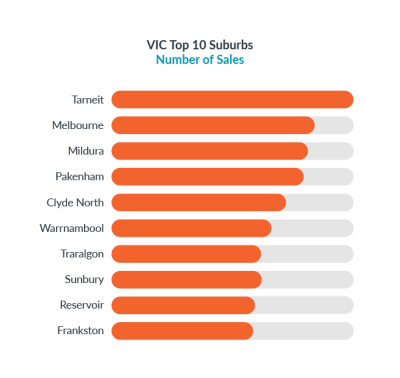
Victoria’s market remains steady, with Tarneit holding the top position, reflecting its ongoing popularity as a high-growth suburb.
One of the standout trends this quarter is the influx of new entrants, with Mildura (3), Warrnambool (6), Traralgon (7), Reservoir (9) and Frankston (10) joining the top 10. This signals a continued shift toward affordability and lifestyle-driven decision-making.
Mildura’s debut at number 3 is particularly notable, representing the most regional location in the list, followed by Warrnambool and Traralgon, highlighting how far buyers are willing to move for value.
Buyers are increasingly prioritising growth corridors and regional centres that still offer connectivity to metro areas, balancing affordability with lifestyle and long-term potentialRead InfoTrack’s full Property Market Update for Q1 2026 here.